The Human Algorithm | Insights on Search, AI & Discovery, Sticky Frog
The Publication

The Search Landscape is
Changing Shape.

As discovery moves from links to AI retrieval, traditional SEO is only half the story. The Human Algorithm is your roadmap to building authority that AI systems can't ignore.

What this publication covers
How search behaviour is shifting from links to AI retrieval
How AI assistants retrieve and recommend brands
Why human expertise and authority are more valuable than ever
Practical strategy for building visibility that AI can't ignore
The Human Algorithm
noun

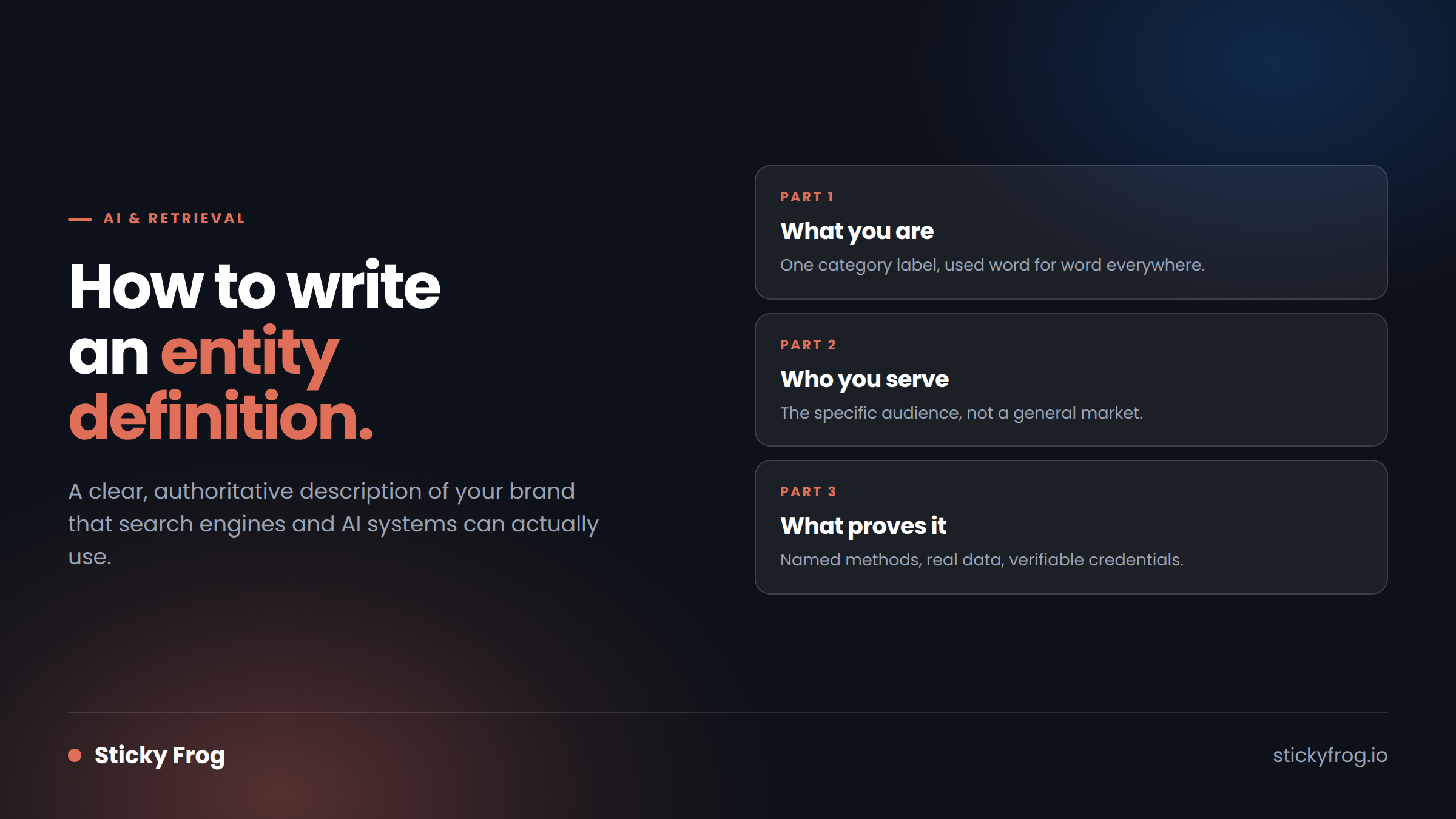
The strategic intersection where human expertise is converted into machine-readable authority.

In the AI era, search engines no longer just index keywords. They retrieve knowledge based on recognised entities. The Human Algorithm is the framework used by Sticky Frog to ensure a brand's unique expertise is structured, cited, and recognised by large language models as the canonical source for their niche.

Core Principle

Machines observe patterns. Humans create them. By optimising for the Human Algorithm, we build visibility that persists even when traditional search analytics go dark.
Read the Manifesto
AI & Retrieval
How AI assistants find, retrieve and recommend brands
AI & Retrieval

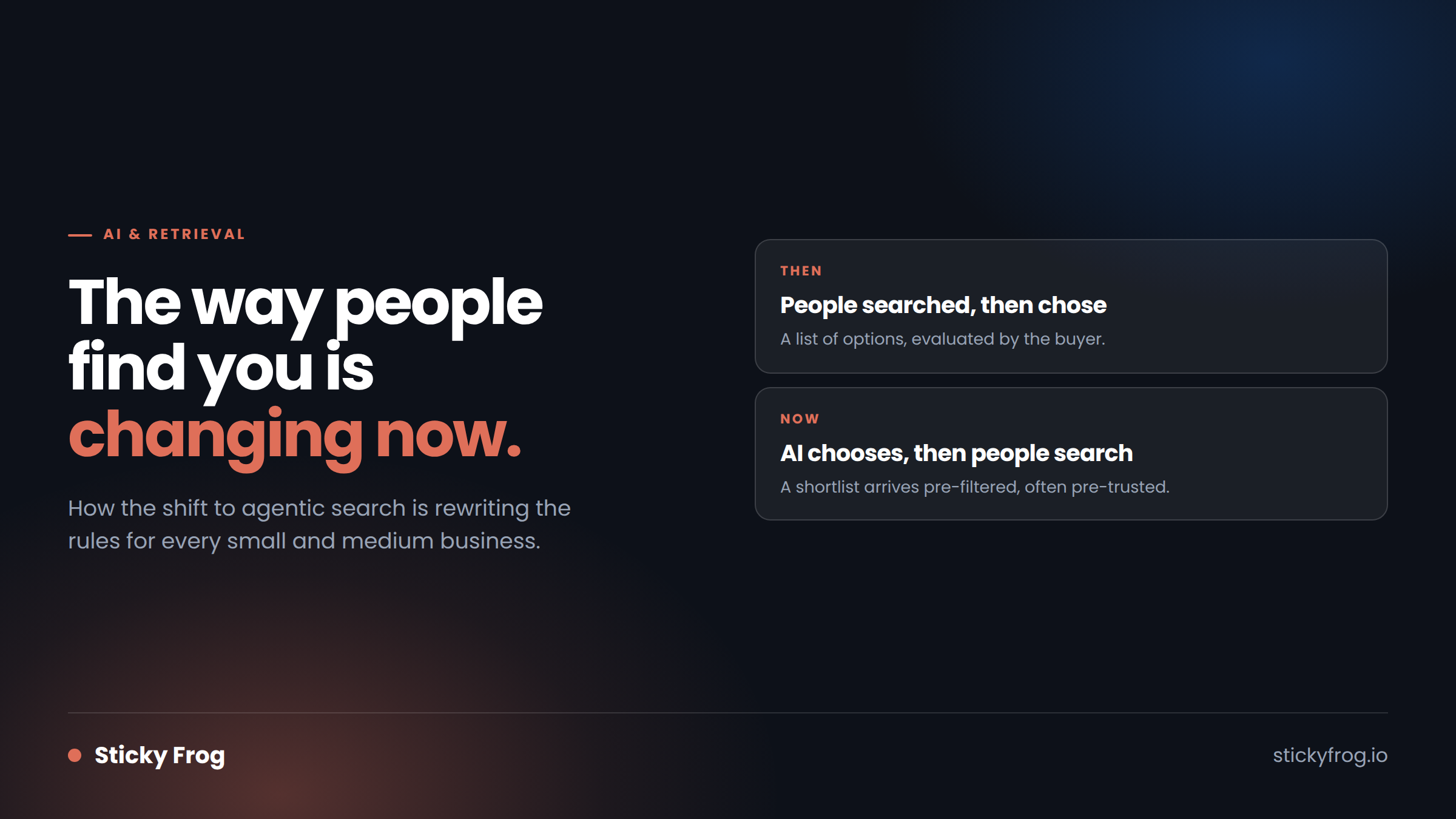
The Way People Find Your Business Is Changing Right Now

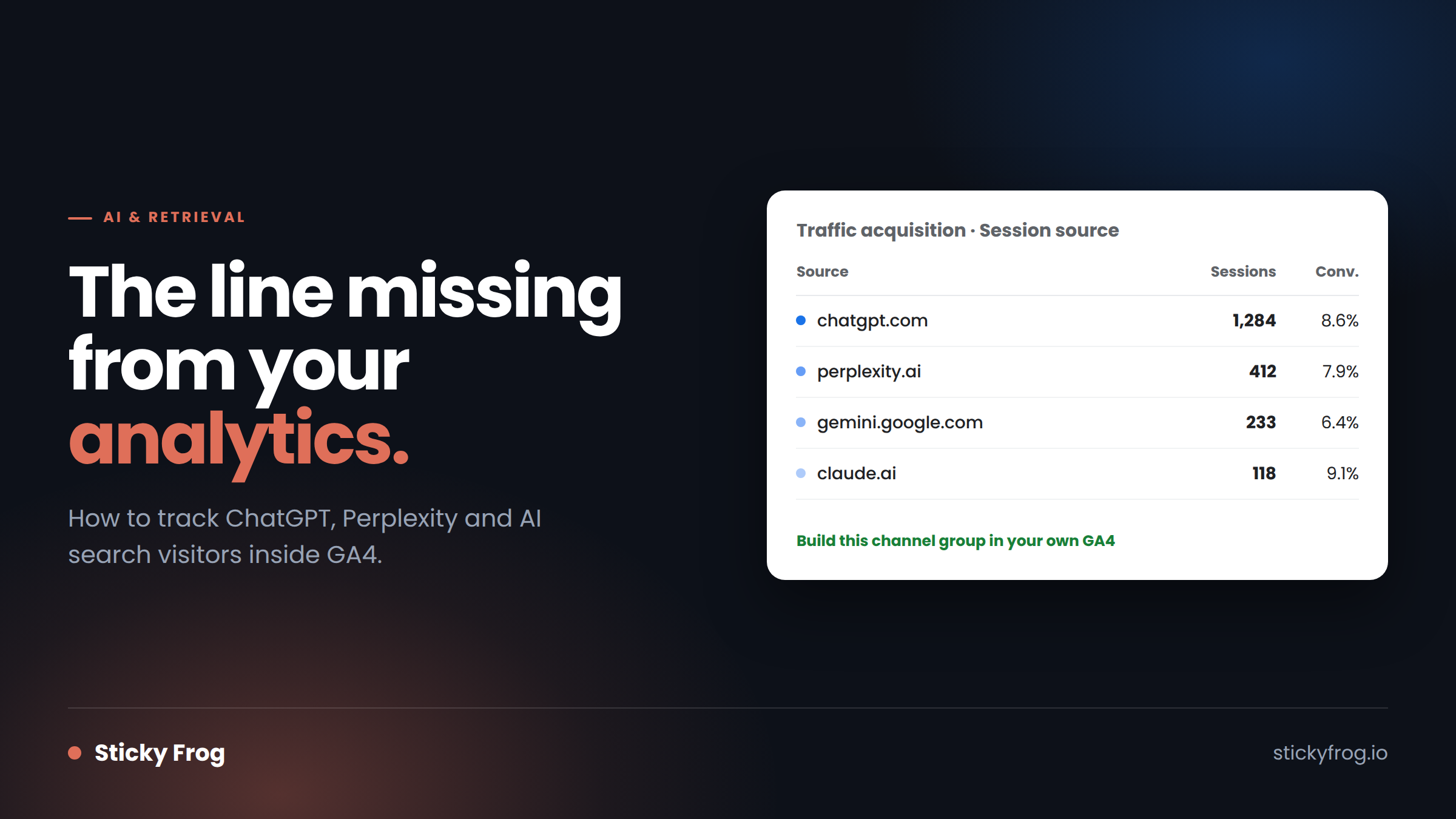
The query fires. The AI answers. The user moves on. No click, no session, no attribution, no evidence, as far as most analytics dashboards are concerned...

Apr 14, 2026 · 12 min read
Read article →
AI & Retrieval

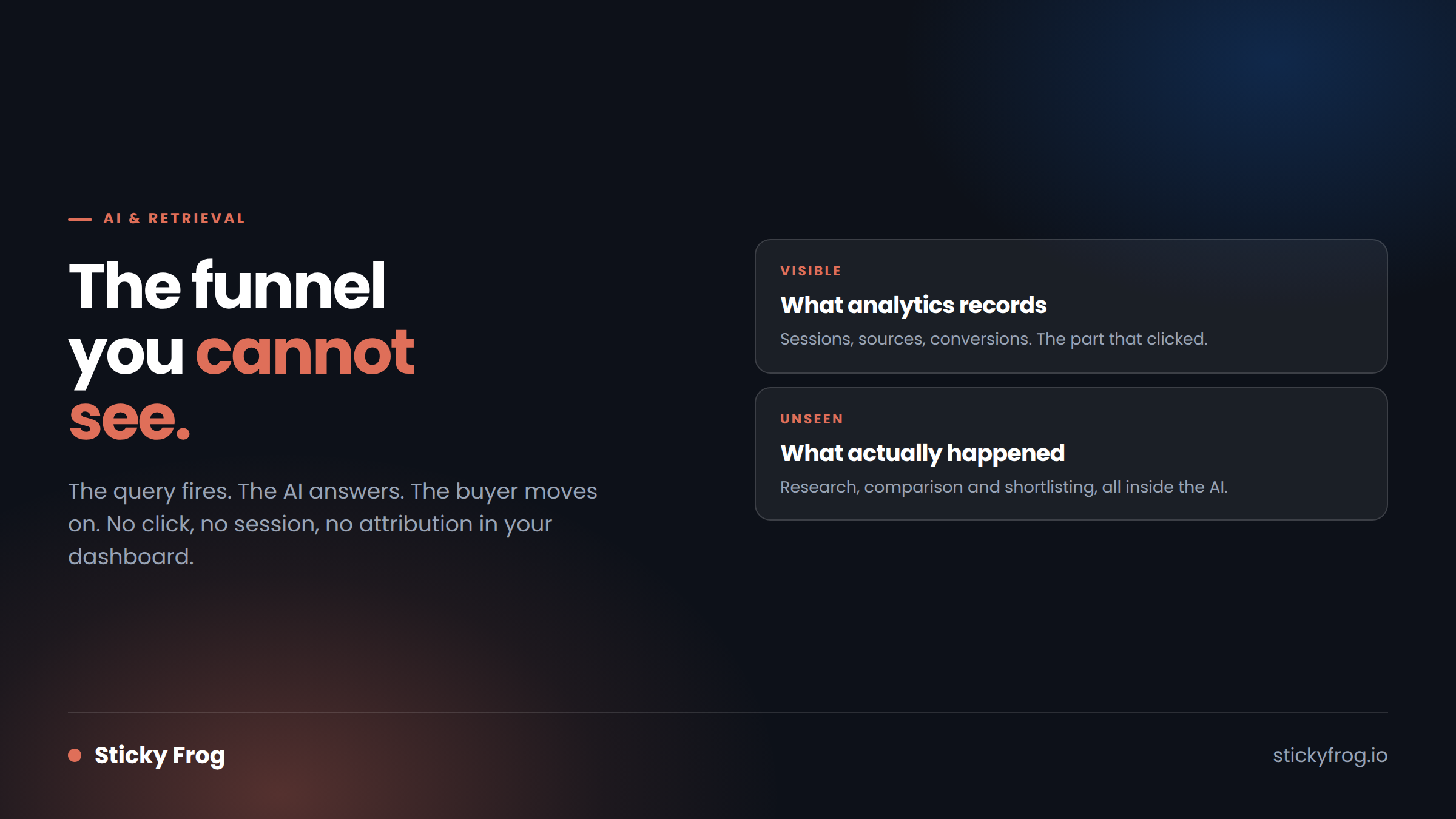
The Unseen Funnel: How AI Mentions Drive Revenue Without Clicks

The query fires. The AI answers. The user moves on. No click, no session, no attribution, no evidence, as far as most analytics dashboards are concerned...

Apr 08, 2026 · 18 min read
Read article →
AI & Retrieval

Before the Algorithm Changed, There Was Always a Human

Google did not invent the preference for authoritative content. It responded to the fact that people were clicking away from thin pages.

Mar 29, 2026 · 10 min read
Read article →
AI & Retrieval

What AI Visibility Actually Looks Like In Practice

"Traditional SEO was working. The last thing you do when something is working is replace it."

Mar 18, 2026 · 6 min read
Read article →
AI & Retrieval

The Recognition Layer: Why AI Trust is Earned Everywhere (Except Your Website)

The Recognition Layer is the filter AI systems use to decide which entities are widely acknowledged as credible.

Mar 16, 2026 · 6 min read
Read article →
AI & Retrieval

Why AI Discovery Is Becoming Search's Second Layer

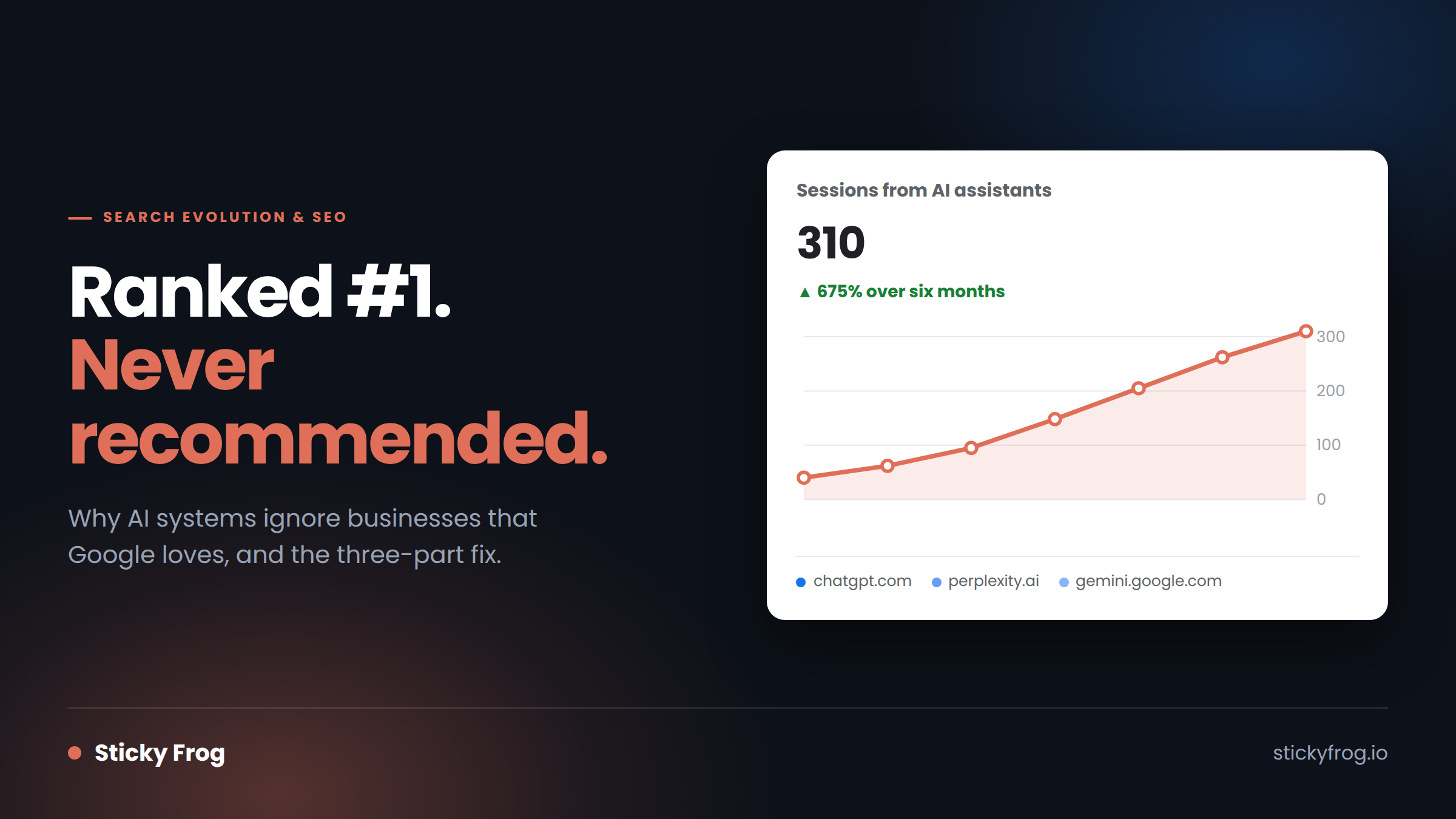
The conversation around AI and search has been stuck in speculation. New data changes the frame entirely: AI is already half the size of traditional search, and most of it is invisible to your analytics.

Mar 15, 2026 · 6 min read
Read article →
AI & Retrieval

The Authority Graph: How AI Decides Which Brands Get Found

For two decades, SEO meant links. AI has replaced that model with something more complex: a web of entity associations, trust signals, and structured knowledge that determines what gets cited.

Mar 13, 2026 · 7 min read
Read article →
AI & Retrieval

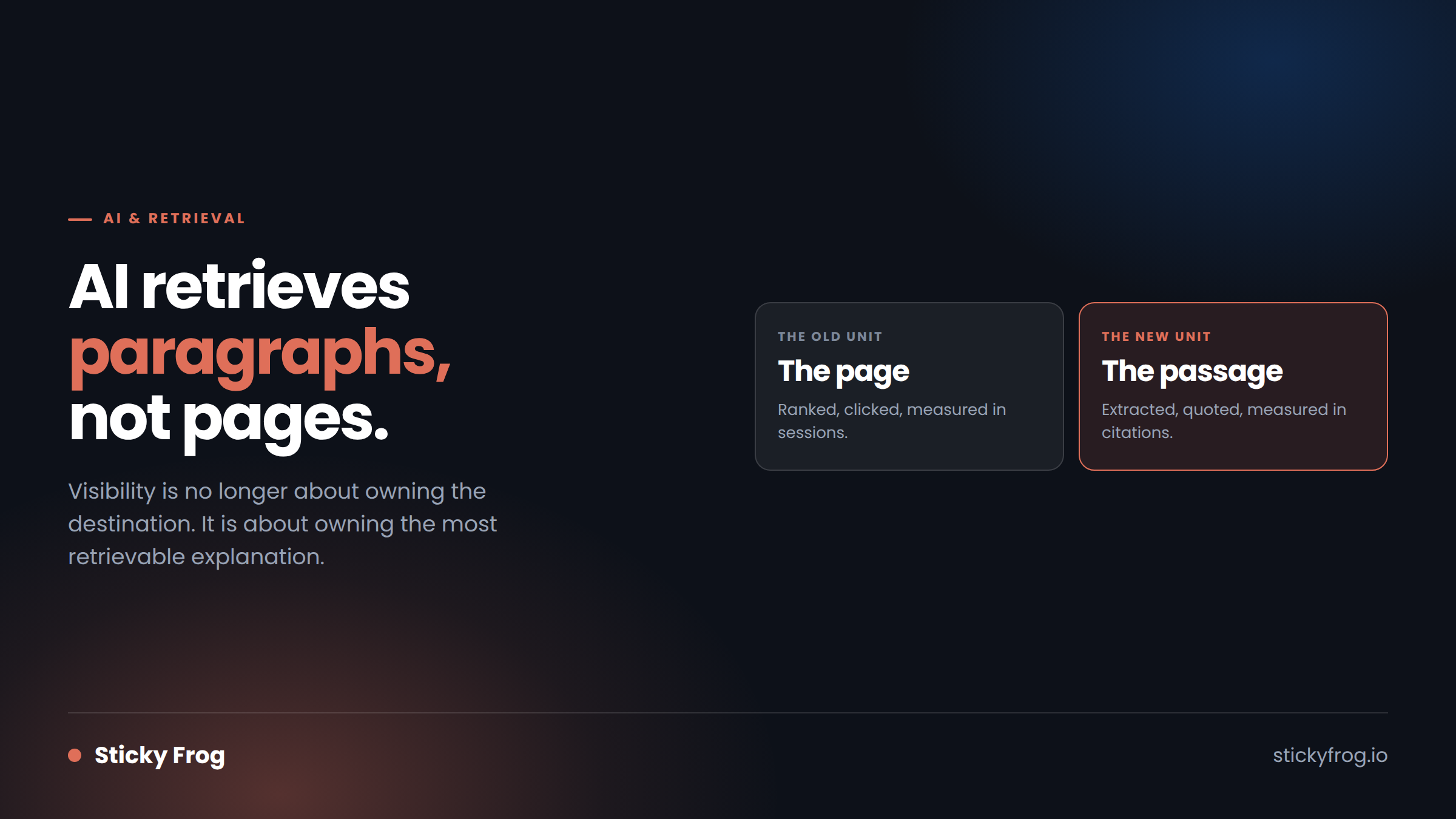
The Passage Economy: Why AI Systems Retrieve Paragraphs, Not Pages

In the AI era, utility is modular. Visibility is no longer about owning the destination. It's about owning the most retrievable explanation.

Mar 12, 2026 · 5 min read
Read article →
AI & Retrieval

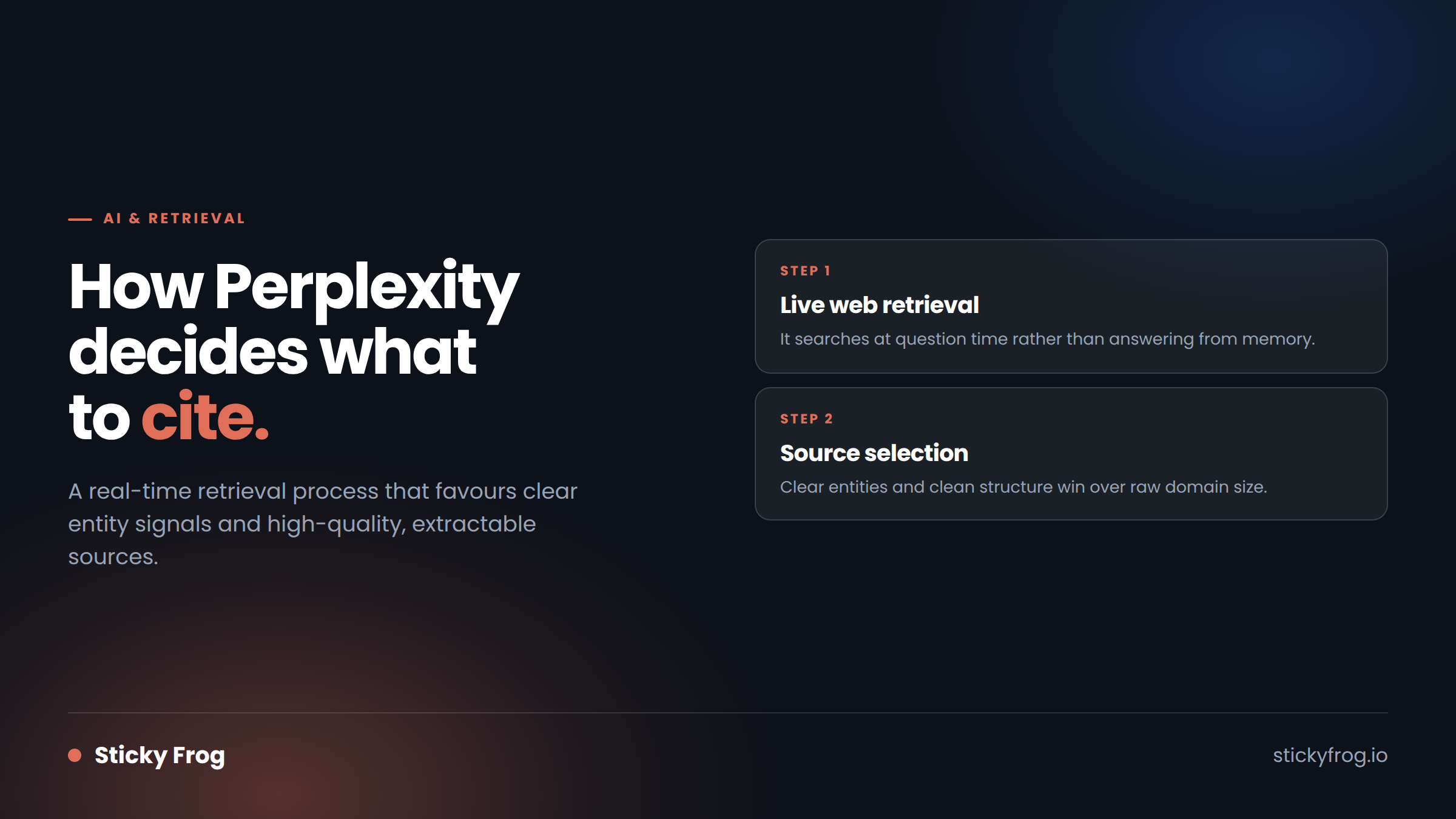
The Signals That Influence AI Retrieval

How AI systems decide which sources appear in answers. As AI search becomes standard, a subtle but seismic shift is underway in how authority is measured.

Mar 12, 2026 · 6 min read
Read article →
AI & Retrieval

The Entity Layer: Why AI Systems Prioritise Brands Over Web Pages

SEO used to be document vs document. AI has changed the game to entity vs entity. Understanding this shift is the foundation of everything that follows.

Mar 11, 2026 · 7 min read
Read article →
AI & Retrieval

The Citation Economy: Why Mentions Matter More Than Links

For twenty years, the backlink shaped the internet. In the AI era, a new currency has emerged: the citation. Here's what has changed and what it means for your visibility strategy.

Mar 10, 2026 · 6 min read
Read article →
Search Evolution & SEO
How search behaviour is changing shape
Search Evolution & SEO

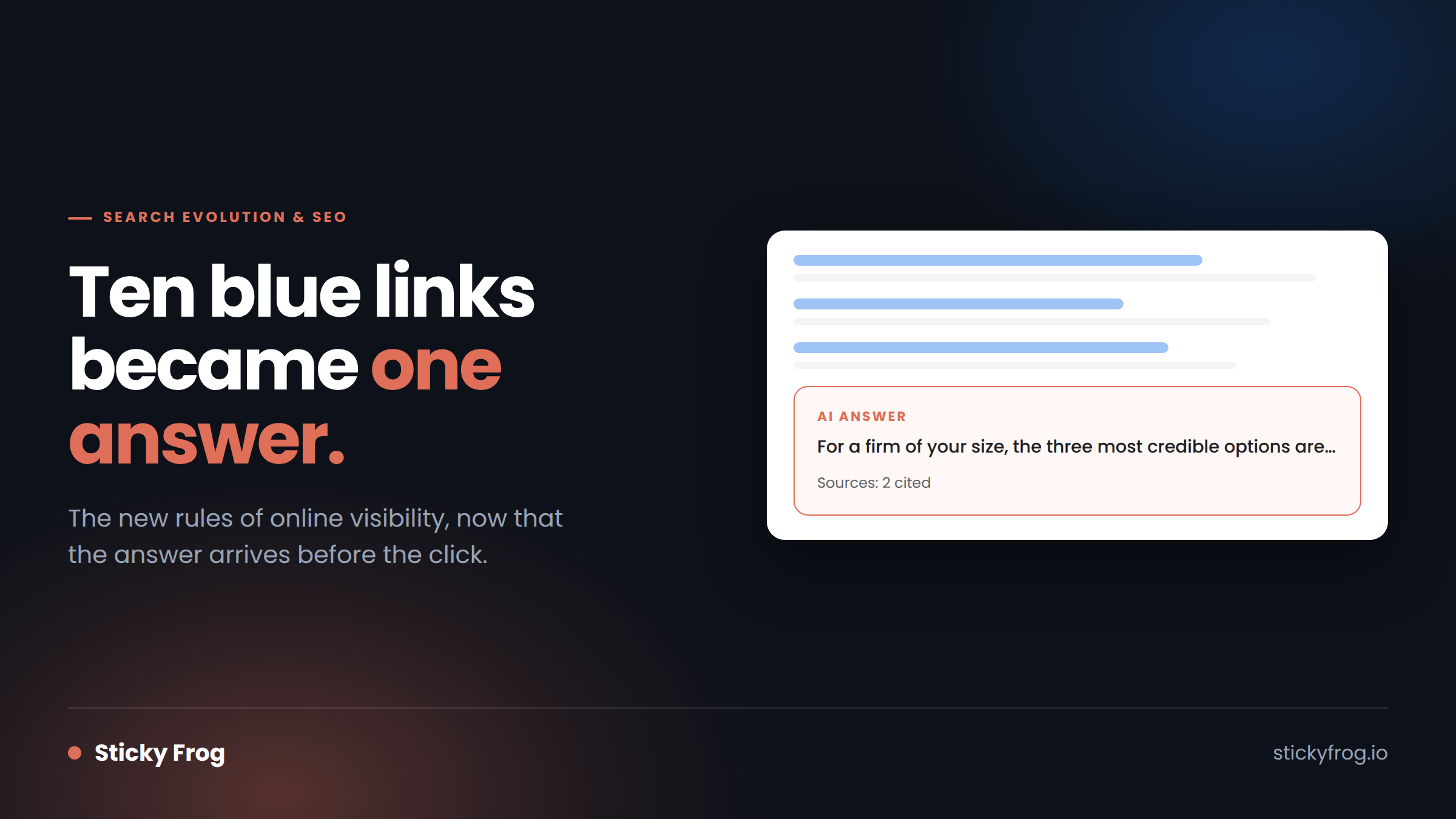
Google AI Mode Has Changed the SEO Playbook. Here Is What That Actually Means for Your Business

I have been tracking this shift closely across client accounts and my own research, and the direction is clear. The brands winning in AI-driven search are...

Mar 23, 2026 · 11 min read
Read article →
Search Evolution & SEO

What Is GEO? The Complete Guide to Generative Engine Optimisation

GEO is not a replacement for SEO. It is the next layer built on top of it, and understanding the difference between the two, and precisely how they relate, is the starting point for any brand...

Mar 22, 2026 · 15 min read
Read article →
Search Evolution & SEO

Entity SEO: Why Search Is Moving from Keywords to Knowledge

Entity SEO is the strategic process of structuring your brand so that search systems understand who you are, what you do, and which topics you are genuinely authoritative about.

Mar 16, 2026 · 6 min read
Read article →
Search Evolution & SEO

The Death of Information SEO: Why "What Is" Content Is a Liability in the AI Era

The definition article was the backbone of organic growth for a decade. AI has made it obsolete overnight. Here's what replaces it.

Mar 11, 2026 · 6 min read
Read article →
Search Evolution & SEO

Why Modern Search Strategy Is Bigger Than SEO

For two decades, search strategy meant SEO. That framing is now too narrow. The brands winning in 2026 are thinking across every layer of how their audience discovers them.

Mar 10, 2026 · 5 min read
Read article →
Search Evolution & SEO

Organic Traffic Isn't Just Falling, It's Changing Shape

Traffic isn't disappearing. It's changing shape. The platforms where your audience finds information have multiplied, and most analytics only see one of them.

Feb 22, 2026 · 6 min read
Read article →
Search Evolution & SEO

Behavioural Visibility: Why SEO Isn't What You Think Anymore

Reading momentum in search behaviour is as important as reading rankings. The signals that predict where visibility is heading are already visible, if you know where to look.

Feb 20, 2026 · 5 min read
Read article →
Search Evolution & SEO

Search Everywhere Optimisation

Search is everywhere: in apps, in AI chat interfaces, in community forums. Optimising for one platform while ignoring the others is a strategy for slow irrelevance.

Feb 19, 2026 · 7 min read
Read article →
83%
of AI usage happens on mobile apps, invisible to standard web analytics
56%
of global search volume now happens inside AI systems, not search engines
The visibility gap

You aren't losing traffic. You're losing visibility in a channel you can't measure. Standard analytics were built for a world where every search left a trace. That world has changed.

Get a free visibility snapshot →

Want to put this into
practice?

A Search Visibility Strategy Audit applies the framework directly to your brand, with a prioritised roadmap and a 90-minute strategy call.

Scroll to Top

Frequently Asked Questions

Common questions about AI search, AEO, and how Sticky Frog helps B2B businesses get cited by AI engines.

What is AEO (Answer Engine Optimisation)?

AEO stands for Answer Engine Optimisation. It is the practice of structuring your website content, entity data, and online presence so that AI search engines like ChatGPT, Perplexity, and Google AI Overviews cite your business in their generated answers. Unlike traditional SEO, which targets click-through traffic, AEO targets citation: being the source an AI engine recommends when someone asks a relevant question.

Why does AI search visibility matter for B2B businesses?

B2B buyers increasingly use AI tools like ChatGPT and Perplexity to generate vendor shortlists before making contact. If your business is not cited by these AI engines, you are invisible to these buyers at the most critical point in their decision-making process. AI shortlisting makes AI search visibility a strategic priority for any B2B business.

What is the difference between SEO, AEO, and GEO?

SEO focuses on ranking in traditional Google search results. AEO (Answer Engine Optimisation) focuses on being cited in AI-generated answers on ChatGPT and Perplexity. GEO (Generative Engine Optimisation) focuses on appearing in outputs of generative AI tools. Sticky Frog specialises in AEO for B2B businesses and professional services.

What is an llms.txt file and does my website need one?

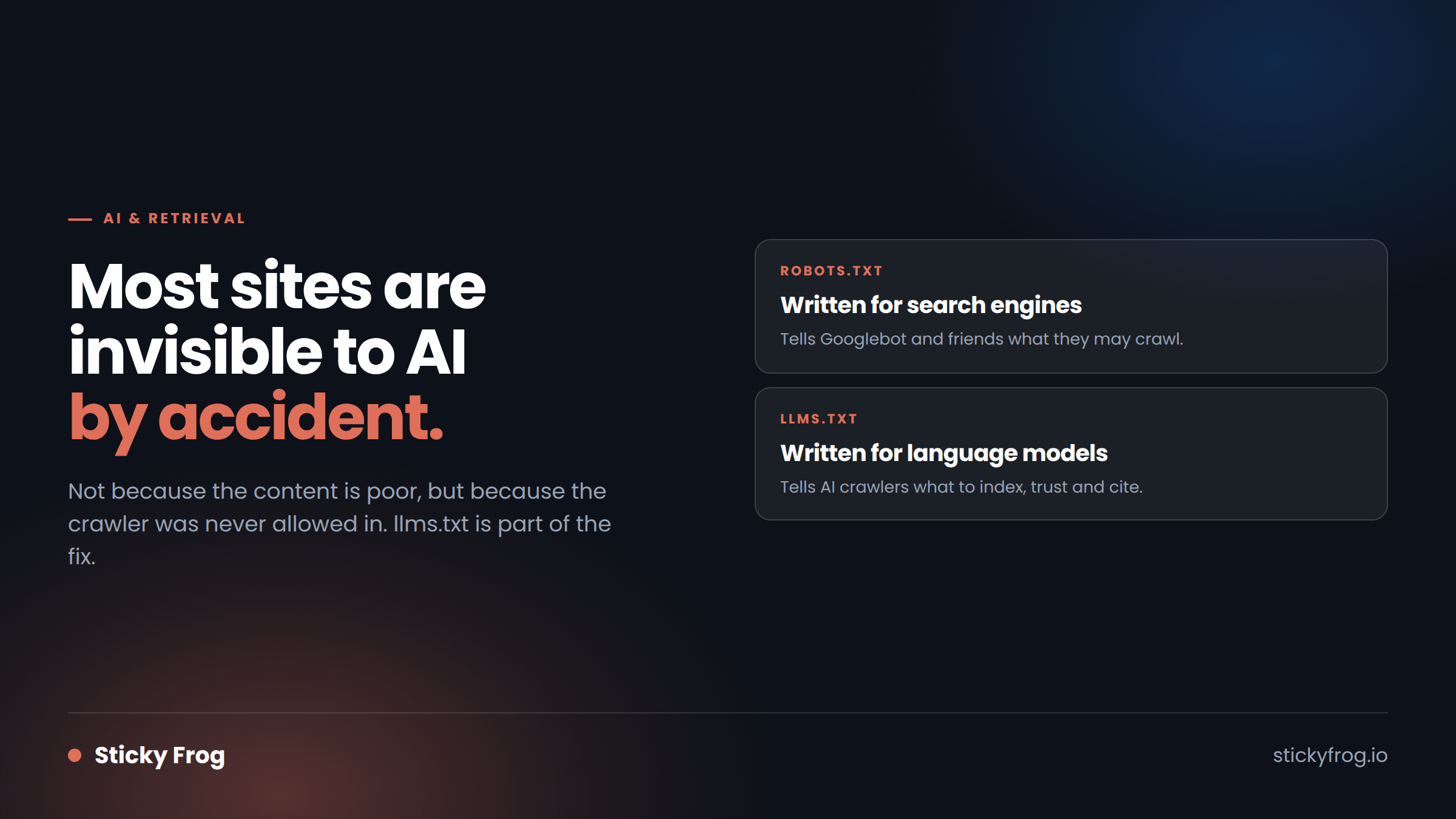
An llms.txt file is a plain-text file at the root of your domain that tells AI language model crawlers what content to index, trust, and cite. It is the AI equivalent of robots.txt. Most business websites do not yet have one, making it a meaningful competitive advantage in AI search visibility.

How long does it take to see results from AEO?

AI search visibility improvements can begin within 4 to 8 weeks for technical fixes like schema markup and llms.txt. Content-driven citation builds over 3 to 6 months. The AI Visibility Accelerator is a minimum 6-month engagement delivering results across ChatGPT, Perplexity, Google AI Overviews, YouTube, and Reddit.