
When someone asks Claude who to trust in your category, what does it say?
Quick answer: Claude decides who to recommend in two stages. It answers first from what it learned during training, then retrieves live web results through Brave Search only when the question needs it. Getting cited consistently means earning authoritative third-party mentions that feed training data, ranking well in Brave rather than Google, and writing content structured for direct extraction.
If you don’t know the answer to that opening question, you have a visibility problem, and it isn’t the kind that gets fixed by publishing another blog post or building more backlinks.
Claude is now the platform handling 40% of enterprise LLM spend, ahead of OpenAI at the enterprise level. And 89% of B2B buyers are now using AI to research before they speak to a single vendor. The shortlist your prospects are walking into calls with is increasingly being built by Claude, before you ever get the chance to make your case.
The brands appearing consistently in Claude’s recommendations are not the ones with the highest domain authority. They are not the ones ranking number one on Google. They are the ones who understand how Claude actually works, and have built their visibility strategy around that understanding.
This article explains exactly what that looks like.
Why Claude Works Differently to Every Other AI Platform
Most brands treating Claude like ChatGPT or Perplexity are making a category error. The underlying architecture differs in two ways that change what visibility actually requires.
Memory Comes Before Retrieval
ChatGPT and Perplexity are predominantly retrieval-first systems: they search before they answer. Claude works the other way round. It answers from training memory first, and retrieves only when the question requires it.
If your brand wasn’t a consistently, authoritatively mentioned entity before Claude’s knowledge cutoff, Claude simply doesn’t know you exist. It can’t cite you, because it has no learned representation of who you are. No amount of publishing since the cutoff changes that directly.
I call this the training memory gap. It’s the most common reason mid-market brands are invisible in Claude responses even with strong Google rankings and good content: they were never present in the training data in a credible, consistent way. The fix isn’t faster content production. It’s systematic presence-building across the sources Claude was trained on, continued over time to shape future cutoffs.
Brave Search, Not Google
When Claude does search the web in real time, it uses Brave as its search index. Not Google. Not Bing.
The implication is significant: approximately 87% of Claude’s live citations match Brave’s top organic results rather than Google’s. Your position on Google is largely irrelevant to Claude’s web-sourced answers. And because almost no one has started optimising specifically for Brave (it’s still framed as a “privacy browser” in most people’s minds, not an AI citation engine), the competitive landscape there is almost completely open.
Checking your Brave rankings should be an immediate priority for any brand serious about its Claude citation rate.
The Commercial Case for Acting Now
40% of enterprise LLM spend currently runs through Anthropic, higher than OpenAI, which means Claude is already the dominant AI platform at the budget level where your most valuable clients are making decisions.
89% of B2B buyers are using AI before they speak to a vendor. The research phase, where your brand either makes it onto the shortlist or doesn’t, is increasingly happening inside tools like Claude, before any human salesperson is involved.
Unlike traditional search, where a buyer who bypasses you can still find you on page two, AI-assisted buying is winner-takes-most. Claude builds a shortlist inside the answer itself. If you’re not on it, there’s no second chance within that interaction.
Every citation reinforces the model’s trust in an entity, which is why the brands building Claude visibility now are establishing a position that gets harder to displace later. This compounding mechanism applies to Claude’s training memory just as it applies to any other channel.
5 Tactics That Build Claude Citation Rate
1. Build Training Memory, Not Just Rankings
The most important shift is understanding that Claude’s recommendations are driven primarily by what it learned during training, not by what you publish today. Your Entity Citation Rate in Claude reflects the depth and consistency of your brand’s presence in the data the model was trained on.
A press mention in an industry publication does more for your Claude visibility than ten self-published blog posts. Named methodologies help. Specific, citable data points help. A clearly defined category and consistent positioning language help. Generic brand language that blends into the background does not.
The same memory-first mechanic shapes how ChatGPT decides who to mention too. If this is new territory, our guide on how to get your startup mentioned in ChatGPT walks through the entity-building groundwork in more depth.
What to do
- Map your current third-party mention footprint: where is your brand cited outside your own domain?
- List the high-trust publications in your category you haven’t appeared in yet. That gap is your training memory gap.
- Prioritise press coverage, industry directories, expert roundups and credible third-party reviews over more self-published content.
- Give Claude something specific to learn: name your methodologies, cite real data points, and keep your category description identical everywhere it appears.
2. Optimise for Brave Search
This is the most immediately actionable lever most brands aren’t yet pulling. Because Claude uses Brave for live web retrieval, your Brave ranking directly influences which version of your brand gets cited when Claude runs a real-time search. Brave’s index isn’t identical to Google’s, and the competitive landscape there is significantly less crowded. Brands with strong traditional SEO foundations often have a head start, but the Brave-specific mechanics are worth understanding on their own terms.
What to do
- Search your most important brand and category queries directly in Brave to map gaps against Google.
- Optimise for clean technical SEO, fast page speeds and structured data, the same fundamentals Brave’s independent crawler rewards.
- Submit your priority URLs through Brave’s manual single-URL submission tool and confirm robots.txt isn’t blocking Brave’s crawler. Brave doesn’t run a sitemap-based console the way Google does, so this manual route plus genuine user traffic through the Web Discovery Project is what actually builds your presence in its index.
3. Earn Third-Party Citations
Approximately 80% of AI citations across models come from third-party pages, not brand sites. This pattern holds in Claude’s citation behaviour: when Claude recommends a brand or cites a source, it’s overwhelmingly likely pulling from somewhere other than the brand’s own domain.
Your blog, however well-written, is not your primary citation engine. Third-party editorial coverage, comparison sites, category roundups, review platforms and niche directories are. Want to see this in practice first? Our guide on checking whether AI is recommending your competitors instead of you shows you how to find out which third-party sources are already feeding those answers.
Stay ahead of it.
Weekly intelligence for marketing leaders navigating the shift from SEO to AI retrieval. Practical, senior-level, no filler.
No spam. Unsubscribe any time.
What to do
- Identify the five to ten publications and platforms in your category that consistently appear in Claude’s answers for the queries your buyers use.
- Prioritise getting featured on those specific properties over publishing more content on your own domain.
- Track which existing third-party mentions Claude already pulls from, and double down on those source types.
4. Make Your Entity Unmistakable
Claude’s memory-first architecture means it needs certainty about who you are before it will confidently recommend you. Inconsistent brand names, varying category labels and different positioning language across channels all work against you at a model level. Claude is pattern-matching across everything it has seen about your brand; if the patterns conflict, the resulting entity representation is weak.
This is the entity clarity problem, and it affects brands more often than they realise. A company that calls itself a “digital marketing agency” on its website, a “growth consultancy” on LinkedIn, and a “performance marketing firm” in its press coverage is sending three different signals. Claude may not confidently associate all three with the same entity, or it may resolve the ambiguity in favour of a competitor with cleaner, more consistent positioning. Our AEO vs SEO guide for founders covers the foundations of building that clarity from scratch.
What to do
- Audit your entity signals across every touchpoint: website, LinkedIn company page, founder profile, press coverage, directories, review platforms.
- Establish one clear category description and use it word-for-word everywhere.
- Make sure any named methodology or framework you own is consistently attributed to your brand across every source that mentions it.
- Run your site through our free AEO Readiness Checklist to see where your entity signals are weakest.
5. Write for Extraction
When Claude retrieves content from the web, it looks for passages it can lift directly into a response. It favours text that’s self-contained, clear, and directly answers a specific question. Dense, jargon-heavy prose that needs surrounding context to interpret gets skipped. Clean, structured content that leads with the answer gets cited.
This is a different standard to the one Google has rewarded. Google often favours comprehensive, long-form coverage. Claude favours extractable specificity: a short, well-structured answer to a precise question will outperform a thorough but meandering 3,000-word article for citation purposes. Our piece on why your business might not be showing up in AI Overviews covers the same extraction logic applied to Google’s AI layer.
What to do
Restructure your key pages with extraction in mind.
- Ensure each section addresses a single, clear user query.
- Lead with a direct answer in the first one to two sentences.
- Deploy clean H2/H3 headers and lean heavily into plain-language FAQ formats, marked up with FAQ schema using a tool like our free Schema Markup Generator so the structure is machine-readable as well as human-readable.
Measuring Your Claude Visibility
Measuring Claude citation rate is newer territory than traditional SEO analytics, but the approach is straightforward.
Build a query library of 30 to 50 prompts representing the questions your buyers actually ask when researching your category. Include navigational queries (your brand name directly), category queries (“who are the best [your category] consultants in the UK?”), and problem queries (“how do I [problem you solve]?”). Run these in Claude regularly, at minimum monthly, ideally weekly, and record whether your brand appears, in what context, and with what framing.
Track three things: presence (are you cited at all?), framing (are you described accurately and in line with your positioning?), and competitive share (who else appears in the same queries?). The change in these metrics over time is your Entity Citation Rate trend. This is also where the mis-visibility problem shows up: brands that appear in Claude responses but are described inaccurately or positioned in the wrong competitive set. Mis-visibility is as worth addressing as invisibility.
If you want a faster starting point, the AI Citation Checker gives you an immediate read on where your brand currently stands, and the AI Visibility Report goes a layer deeper into framing and competitive share once you know you have a presence to track.
The Compounding Advantage
There’s a reason this matters beyond individual recommendations.
AI systems don’t evaluate every query cold. They develop reinforced patterns of trust. Sources that appear consistently and credibly in response to queries within a topic cluster get cited more often, which reinforces their position in the model’s output, which makes them more likely to appear again.
That’s how Claude visibility compounds: slow to start, significant once established. The brands building it now are ahead of a competitive shift that is still early but accelerating. Every week that passes is another week your competitors could be appearing in the shortlists your buyers are building.
The first step is knowing where you currently stand.
Frequently Asked Questions
What does it actually mean for a brand to be “cited” by Claude?
It means Claude names your brand, links to your content, or references your data when answering a relevant question, either from what it learned in training or from a live Brave Search result. A citation is the AI equivalent of making the shortlist before a buyer ever speaks to you directly.
Does my Google ranking affect whether Claude recommends my brand?
Only indirectly. Claude’s live web citations are drawn from Brave, not Google, so your Google position doesn’t translate automatically. Strong technical SEO tends to help in both indexes, but Brave rankings and Google rankings can diverge significantly for the same query.
How is Claude’s approach different from ChatGPT’s or Perplexity’s?
ChatGPT and Perplexity are predominantly retrieval-first: they search before answering. Claude answers from training memory first and only retrieves live results when the question needs it, which is why a strong training-data presence matters more for Claude than for either competitor.
How long does it take to start appearing in Claude’s answers?
Live, Brave-sourced citations can shift within weeks of improving your Brave ranking and technical SEO. Training-memory citations move far slower, since they depend on Claude’s next knowledge cutoff and sustained third-party mentions in the meantime, so treat this as a multi-month, compounding effort rather than a quick fix.
Does my own blog count toward my Claude citation rate?
It helps, but it’s rarely the main driver. Around 80% of AI citations across models come from third-party pages rather than brand-owned domains, so editorial coverage, directories and review platforms typically carry more weight than additional posts on your own site.
Is there a free way to check if Claude already recommends my brand?
Yes. Open Claude directly, type the questions your buyers actually ask, and record who gets named and which sources get cited. It costs nothing but time. Our free AI Citation Checker speeds up that baseline if you’d rather not do it by hand.
How often should I re-check my Claude visibility?
Monthly is a sensible rhythm for most brands. AI answers shift as sources change, so a single check is only a snapshot. Running the same prompt set every month lets you see the trend, prove what your work has moved, and catch a competitor pulling ahead before it costs you pipeline.
Start here
Free, takes two minutes, and gives you an immediate read on whether your brand is already appearing in the AI responses that matter to your buyers.
Check your Claude citation rate →Get the full AI Visibility Strategy Audit
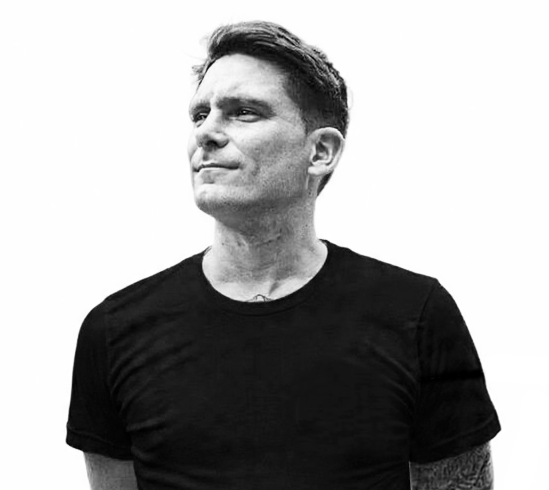
Founder & Author within Sticky Frog and creator of The Human Algorithm. 15 years of SEO experience spanning early-stage startups, scale-ups, and enterprise brands including Toyota Europe, Bupa, EY, Citibank, Deliveroo, and American Express, he specialises in AI search visibility, entity SEO, and search strategy for the era where clicks are declining but influence is not. Get found for what you do best.