
Why Your 2026 Search Strategy is Bigger Than SEO
For two decades, “Search Strategy” was synonymous with SEO. The mandate was linear: Optimize for Google, capture the click, and convert the session.
The Legacy Formula: Rank #1 → Capture Traffic → Pipeline.
Entire marketing organizations were built on this mechanical loop. We treated keywords as the primary unit of value and rankings as the ultimate barometer of brand health. But the environment that made this model profitable is changing fast.
Discovery is no longer a destination.
It’s a distributed ecosystem.
The Fragmentation of Intent
Search behavior has fragmented across a multi-platform “mesh.” A user’s journey no longer starts and ends on a SERP (Search Engine Results Page). It is a non-linear path through:
- Generative AI: ChatGPT, Gemini, and Perplexity.
- Vertical Search: YouTube, Reddit, and LinkedIn.
- Community Nodes: Niche forums and dark social.
In this new environment, the “first answer” is rarely a list of links. It is a synthesized response generated by an AI assistant or a peer-validated recommendation within a community. Traditional SEO—built for a world of centralized discovery—is no longer a complete strategy. It is merely one specialized tactic.
The Rise of Zero-Click Arbitrage
We are witnessing the slow end of the Click-Through Era. Google and its competitors are increasingly transitioning from search engines to answer engines. Through Featured Snippets, AI Overviews (AIO), and Knowledge Panels, the goal is now to satisfy user intent without a website visit.
For Heads of Marketing, this creates a Measurement Paradox: A page can hold the top position and achieve massive “visibility,” yet see a 40% decline in referral traffic.
Ranking #1 is no longer a guarantee of a session. And a session is no longer the only metric of influence.
From the Link Economy to the Citation Economy
Traditional SEO was the currency of the Link Economy. Success was predicated on “link equity”—earning the digital vote that told Google to rank you.
However, as AI-driven discovery matures, we are entering the Citation Economy.
When an LLM synthesizes an answer or recommends a vendor, it isn’t “ranking” websites; it is retrieving Entities. It looks for the brands that are most consistently cited, referenced, and validated across the web’s most authoritative nodes.
In the Citation Economy, visibility is about Retrievability. If an AI assistant summarizes your category but fails to cite your brand, you have lost the customer before they even consider a search query.
o if discovery is fragmented, how should brands structure their strategy?
One way to think about modern discovery is through a simple model: three layers of search visibility.
The Three Layers of Search Visibility
This idea is explained in more detail in the Search Visibility Framework, which outlines the three layers modern brands need to manage.
To compete, marketing leaders must look past the “Blue Link” and manage three distinct layers of discovery:
Layer 1: Traditional Search (The Base)
The technical fundamentals—site architecture, keyword relevance, and authority. These remain the baseline for being “crawlable” and “indexable.”
Layer 2: Discovery Platforms (The Social Signal)
User-led discovery on Reddit, YouTube, and LinkedIn. This is where brand sentiment is built and where AI models “learn” which brands are currently trusted by humans. These platforms form the second layer of the Search Visibility Framework, where brand credibility and discovery often begin.
Layer 3: AI Retrieval (The Synthetic Layer)
Optimization for Large Language Models. This involves structuring data and building a “Human Moat” of expert-led content that AI agents use as a primary source for their syntheses.
Redefining the Marketing Dashboard
If search behavior is fragmenting, our reporting must follow. We can no longer rely on a narrow set of metrics like CTR and organic sessions to justify SEO spend.
Stay ahead of it.
Weekly intelligence for marketing leaders navigating the shift from SEO to AI retrieval. Practical, senior-level, no filler.
No spam. Unsubscribe any time.
A resilient brand may see stagnant organic traffic while experiencing growth in brand searches, direct traffic, and AI citations.Traditional analytics tools often miss these “Dark Social” and “Dark Search” signals.
The Strategic Pivot
The future of Search Visibility belongs to those who build Omni-channel Authority. This requires:
- Expert-Led Content: Moving from “SEO content” to “Subject Matter Expertise.”
- Entity Building: Ensuring your brand is a recognized node in the Knowledge Graph.
- Platform Diversification: Showing up where your audience is already talking.
Search is not disappearing; it is simply becoming invisible, integrated directly into the tools we use to work and live. Understanding this shift is the difference between competing for a shrinking slice of Google traffic and owning the discovery journey wherever it happens.
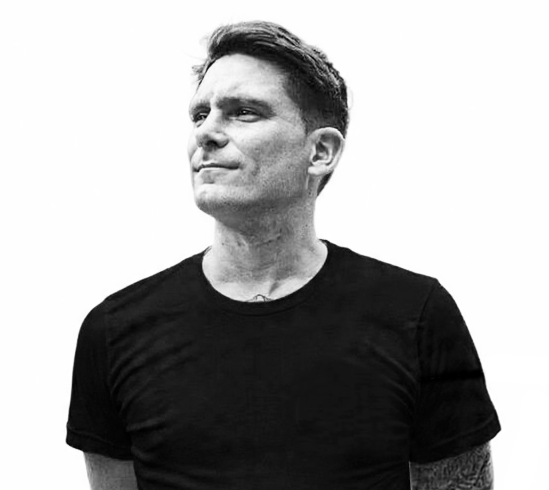
Founder & Author within Sticky Frog and creator of The Human Algorithm. 15 years of SEO experience spanning early-stage startups, scale-ups, and enterprise brands including Toyota Europe, Bupa, EY, Citibank, Deliveroo, and American Express, he specialises in AI search visibility, entity SEO, and search strategy for the era where clicks are declining but influence is not. Get found for what you do best.