
Organic traffic is not disappearing. The way influence forms before a click is changing, and most analytics dashboards are not built to show it. The brands adapting fastest are the ones measuring presence before the click, not just traffic after it.
Theres a quiet assumption in the marketing world that organic traffic is something you earn once and then simply collect over time. Someone writes content, search “finds” it, and users click, rinse, repeat.
I first started documenting this pattern in 2022 while tracking performance across a portfolio that included both consumer and B2B accounts. Google traffic was holding relatively steady on most clients, but the downstream conversion metrics were weakening. When I dug into the referral data more carefully, what I found was that a growing share of visits were arriving with no referral attribution at all, direct traffic that was not direct in the traditional sense. Users had found the brand somewhere else first, formed an intention, then come to the site. The discovery had happened outside the funnel I was measuring.
Over the last year I have noticed something in conversations with clients and agency partners: performance dashboards look fine, engagement looks steady, click-throughs are not plummeting, yet something has shifted. It is not a spike. It is more like a soft fade.
How is discovery changing shape?
A lot of the talk right now uses phrases like “zero-click search apocalypse” and “search is dead.” That framing does two things: it makes businesses anxious, and it obscures what is actually happening.
The truth is not that search is dying. It is just changing how influence forms.
So instead of: User → click → website → engagement
What is happening more often: User → AI summary → instant perception → decision or next step
That summary doesn’t always send someone away. It sometimes answers the question in a way that feels complete. And that changes where influence begins, not at the click, but before the click.
Why does this feel hard to measure?
Most digital strategies are optimised for clicks. We report on keyword rankings, traffic growth, landing page conversions, backlinks. These are valid measures of optimisation, but they assume the click is the centre of gravity.
Right now, that gravity is shifting upstream. Before someone ever clicks, they are already interpreting your brand. They are being influenced, or not, by how AI tools summarise your presence, how coherently your messaging has been repeated across platforms, and how clearly your positioning clusters around a consistent idea.
We have trained teams to measure what happens after attention arrives. But now attention is being shaped before it arrives.
What is Behavioural Visibility?
I have been working in visibility and search for years. Early on, my view of SEO was purely technical, keywords, on-page, crawl optimisation. Over time something clarified: the work that gets remembered is not the most technically optimal. It is the most emotionally consistent.
When a brand has repeatedly occupied a clear place in language, context, and narrative, humans find it familiar, and AI systems do too. AI doesn’t feel emotion, but it recognises patterns of expression and association.
If your message looks distinct, repeatable, and aligned across search, social, thought leadership, and paid content, AI tools are more likely to reference it in their summaries. Not because you “manipulated the system”, but because your presence forms a clearer pattern than your competitors’.
That is what I think of as Behavioural Visibility: the idea that visibility today is not just about being indexed. It is about being meaningfully interpreted.
What does this mean for marketing teams today?
If your organic traffic graphs are flat or slightly declining, that does not mean your strategy failed. It means your strategy is still optimised for old gravity.
Instead of asking “why are we losing traffic?”, try asking: “what is our presence signalling before the click?”
- What stories are being told about your brand at the query level?
- What language is used in AI overviews that mention you, or omit you entirely?
- Are third-party references consistently aligning with your positioning?
And influence isn’t just something you earn. It is something AI systems interpret based on repetition and clarity across surfaces. Your paid creative and organic content still matter, but they matter as inputs to a broader pattern that is increasingly evaluated by AI first, and humans second.
Why AI Discovery Is Becoming Search’s Second Layer explains where a significant share of that traffic is going. Search Everywhere Optimisation covers the practical response. Full framework: Search Visibility Framework.
The Zero-Click Calculator estimates what percentage of your search demand may be going untracked, a useful reality check before reviewing your visibility strategy.
Frequently Asked Questions
Why is organic traffic falling even though my rankings are stable?
Because an increasing share of search interactions end without a click. AI Overviews, featured snippets, and direct answers satisfy user intent before they reach your page. Stable rankings with falling traffic typically indicate that the queries you rank for are increasingly being resolved by AI on the SERP itself.
What is zero-click search and how does it affect organic traffic?
Zero-click search is when a user’s query is answered directly on the search results page without them clicking through to any website. Approximately 60% of searches now end this way. For content primarily targeting informational queries, this represents a structural reduction in potential click volume regardless of ranking position.
What should I measure instead of just traffic?
Alongside traffic, track: branded search volume (an indicator that people are finding and remembering you elsewhere), direct traffic trends, share of voice in AI-generated answers for your key category queries, and cross-platform mention volume. These measure presence and recognition, the upstream signals that drive downstream traffic.
Does this mean SEO is no longer worth investing in?
No. SEO remains essential for Layer One visibility, high-intent transactional queries where users are actively seeking to purchase or engage. The shift means SEO alone is no longer sufficient for full-funnel discovery. Building presence across Layers Two and Three, discovery platforms and AI retrieval, complements and compounds the returns from traditional SEO investment.
Stay ahead of it.
Weekly intelligence for marketing leaders navigating the shift from SEO to AI retrieval. Practical, senior-level, no filler.
No spam. Unsubscribe any time.
What is the most important thing I can do right now?
Test how your brand appears in AI systems for your key category queries. Open ChatGPT, Gemini, and Perplexity. Search for your category leaders, your specific service, and your brand name directly. Record what you find. That snapshot is more revealing than any analytics dashboard about where your visibility actually stands in 2026.
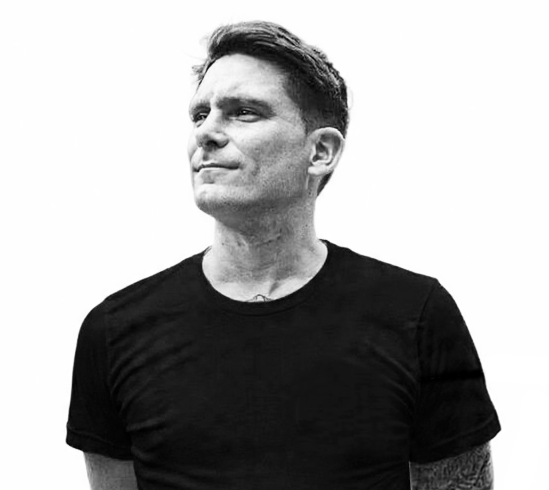
Founder & Author within Sticky Frog and creator of The Human Algorithm. 15 years of SEO experience spanning early-stage startups, scale-ups, and enterprise brands including Toyota Europe, Bupa, EY, Citibank, Deliveroo, and American Express, he specialises in AI search visibility, entity SEO, and search strategy for the era where clicks are declining but influence is not. Get found for what you do best.